

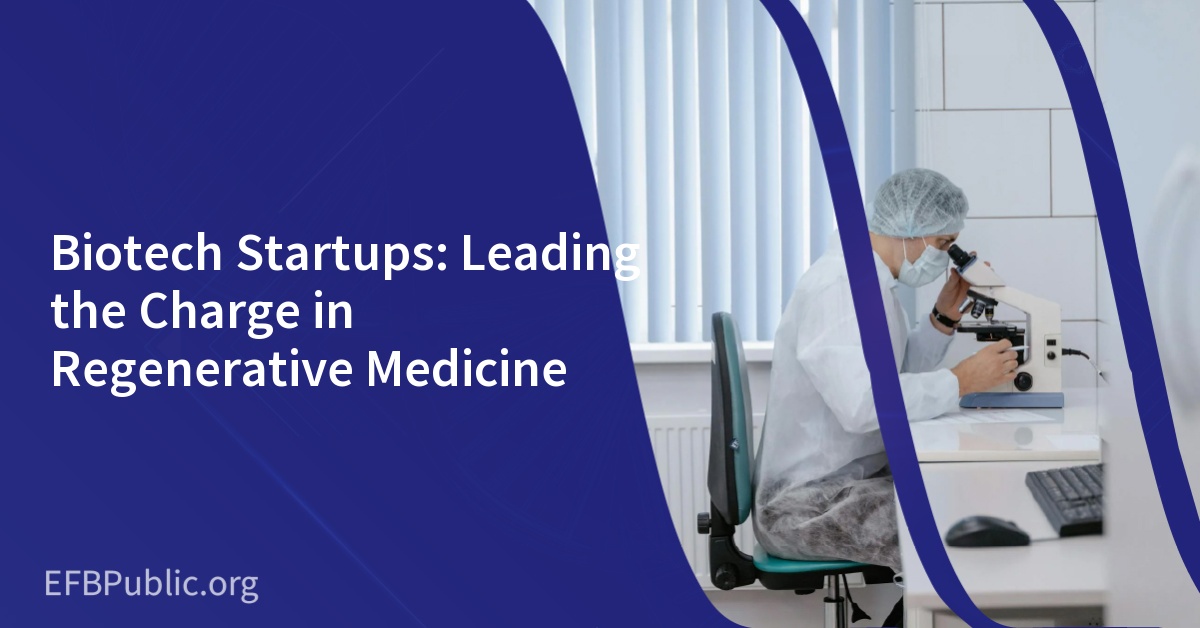
Biotech startups are at the forefront of innovation in regenerative medicine, driving the development of innovative therapies that have the potential to revolutionize healthcare. With a focus on cutting-edge technologies and breakthrough research, these startups are paving the way for a future where regenerative medicine plays a significant role in improving patient outcomes.
The field of regenerative medicine utilizes biotechnology and bioengineering to harness the power of stem cells and other advanced therapies to repair and replace damaged tissues and organs. Biotech startups specializing in regenerative medicine are leading the charge in developing novel treatments for a wide range of conditions, including neurodegenerative disorders, heart disease, spinal cord injuries, and diabetes.
By combining their expertise in molecular biology, genetics, and engineering, these startups are pushing the boundaries of what is possible in healthcare. They are developing innovative therapies that rely on stem cells, gene therapies, tissue engineering, and bioprinting techniques to provide targeted and personalized treatments for patients.
Among these emerging technologies, cellular therapies stand out as perhaps the most transformative force reshaping modern medicine. Startups specializing in this space are engineering living cells into precision treatments capable of targeting disease at its source—a level of specificity that conventional pharmaceuticals have long struggled to achieve. The field of biotech startup breakthroughs in cellular therapies illustrates just how rapidly this discipline is advancing, with pioneering companies converting once-theoretical concepts into clinical realities that are beginning to reach patients around the world.
With their focus on innovative therapies, biotech startups are not only advancing the field of regenerative medicine but also creating new opportunities for patients, healthcare providers, and the biotech industry as a whole. The groundbreaking research and developments in these startups are shaping the future of healthcare, offering hope for those in need of better treatment options.
Beyond regenerative medicine, biotech startups are making remarkable strides in some of the most underserved corners of healthcare. Patients living with rare diseases — conditions that often lack approved treatments entirely — are increasingly finding hope through the work of agile, science-driven companies willing to pursue high-risk, high-reward research. The growing field of biotech startups targeting rare diseases demonstrates just how far this sector’s patient impact can reach, extending well beyond mainstream therapeutic categories and into areas where innovation is not simply beneficial, but genuinely life-changing.
As the field of regenerative medicine continues to evolve, biotech startups will play a crucial role in driving progress and bringing innovative therapies to the market. Their dedication to pushing the boundaries of science and technology ensures that the potential of regenerative medicine is fully realized, leading to improved patient outcomes and a brighter future for healthcare.
The Importance of Biotechnology and Bioengineering in Healthcare
Biotechnology and bioengineering play a pivotal role in driving advancements in healthcare, paving the way for precision medicine and a more sustainable future. These interdisciplinary fields combine engineering principles with biology to develop innovative therapies, diagnostic tools, and sustainable agricultural practices.
Enhancing Precision Medicine
Biotechnology and bioengineering contribute to the field of precision medicine by tailoring medical interventions to individual patients. With the use of genetic information and biotechnological interventions, healthcare professionals can personalize treatment plans and improve patient outcomes. This approach revolutionizes the way diseases are diagnosed, treated, and prevented.
Revolutionizing Healthcare
Biotechnology and bioengineering have the potential to revolutionize the healthcare industry as a whole. They enable the development of cutting-edge therapies, such as gene therapies and stem cell-based treatments, which hold promise for a wide range of diseases and conditions. These fields also drive progress in regenerative medicine, tissue engineering, medical imaging, and drug delivery systems.
Addressing Ethical Considerations
As biotechnology and bioengineering continue to advance, it is important to address ethical considerations that arise from the use of genetic information and biotechnological interventions. Ongoing research endeavors to ensure that these technologies are used responsibly and ethically, taking into account privacy concerns, data security, and equitable access to healthcare.
| Key Points | Biotechnology and Bioengineering in Healthcare |
|---|---|
| 1 | Biotechnology and bioengineering contribute to precision medicine by tailoring medical interventions to individual patients. |
| 2 | These fields enable the development of innovative therapies, diagnostic tools, and sustainable agricultural practices. |
| 3 | Biotechnology and bioengineering have the potential to revolutionize the healthcare industry, including regenerative medicine and drug delivery systems. |
| 4 | Ethical considerations arising from the use of these technologies are actively addressed in research to ensure responsible and equitable practices. |
In conclusion, biotechnology and bioengineering are driving forces in advancing healthcare. Their contributions to precision medicine, development of innovative therapies, and addressing ethical considerations are shaping the future of healthcare delivery. With continued research and advancements in these fields, the potential for personalized, effective, and sustainable healthcare becomes increasingly promising.
Stem Cells: Key Players in Regenerative Medicine
Stem cells are the cornerstone of regenerative medicine, offering immense therapeutic potential for a wide range of diseases and injuries. These unique cells have the remarkable ability to self-renew and differentiate into various cell types in the body, making them invaluable for tissue repair and regeneration. Stem cells hold promise in treating conditions such as spinal cord injuries, heart disease, neurodegenerative disorders, and diabetes.
There are different types of stem cells, including embryonic stem cells derived from early-stage embryos and adult stem cells found in various tissues. Embryonic stem cells are pluripotent, meaning they can develop into any cell type, making them highly versatile. Adult stem cells, on the other hand, are multipotent and can generate specific cell types, depending on their tissue of origin.
In regenerative medicine, stem cells are used to replace damaged or diseased cells, stimulate tissue regeneration, and promote healing. By harnessing the therapeutic potential of stem cells, researchers and biotech companies are pioneering innovative treatments that can revolutionize healthcare and improve patients’ quality of life.
Applications of Stem Cells in Regenerative Medicine
Stem cells have diverse applications in regenerative medicine, with ongoing research exploring their potential in various fields:
- Spinal cord injuries: Stem cells can differentiate into neural cells and promote nerve regeneration, offering hope for individuals with spinal cord injuries.
- Heart disease: Stem cells can differentiate into cardiac cells and help repair damaged heart tissue, potentially improving heart function.
- Neurodegenerative disorders: Stem cells may hold the key to developing treatments for diseases like Alzheimer’s and Parkinson’s by replacing damaged brain cells.
- Diabetes: Stem cells are being investigated as a potential source for pancreatic beta cells, which can restore insulin production in individuals with diabetes.
These are just a few examples of the therapeutic potential of stem cells in regenerative medicine. Continued research and advancements in stem cell technologies are expected to pave the way for groundbreaking treatments and therapies that can transform the field of healthcare.
Section 4: The Rapid Growth of the Stem Cell Market
The stem cell market is experiencing rapid growth within the biotechnology and healthcare industries. As advancements in stem cell technologies continue to emerge, the market encompasses various sectors, including stem cell research tools, stem cell banking and storage, stem cell therapies, and regenerative medicine products. The increasing prevalence of chronic diseases, coupled with the growing aging population, are key factors driving the expansion of the stem cell market.
A significant driver of this growth is the increasing demand for stem cell therapies, which hold immense potential for treating a wide range of diseases and injuries. Stem cells have the unique ability to replace damaged cells, generate new tissues, and offer potential cures for conditions such as spinal cord injuries, heart disease, neurodegenerative disorders, and diabetes. The therapeutic potential of stem cells has captured the attention of researchers, healthcare providers, and patients alike, contributing to the accelerated growth of the stem cell market.
Collaborations between research institutions, pharmaceutical companies, and government initiatives further propel the market’s growth and commercialization of stem cell-based therapies. These partnerships foster innovation, accelerate clinical trials, and enhance the accessibility of stem cell treatments. With significant investments in research and development, the stem cell market is expected to reach a value of $18.4 billion by 2028.
| Factors Driving the Rapid Growth of the Stem Cell Market | Key Players in the Stem Cell Market |
|---|---|
|
|
Section 5: Innovative Biotech Startups in Regenerative Medicine
The field of regenerative medicine is witnessing groundbreaking advancements through the efforts of numerous biotech startups. These innovative companies are at the forefront of developing transformative therapies and treatments using cutting-edge technologies such as stem cells, gene therapies, tissue engineering, and regenerative medicine techniques. Their dedication to pushing the boundaries of medical science offers immense hope for patients facing debilitating conditions and chronic diseases.
Among the notable biotech startups making waves in regenerative medicine are Aspen Neuroscience, Magenta Therapeutics, Enochian Biosciences, and Rubius Therapeutics. These pioneering companies are leveraging the potential of regenerative medicine to address a wide range of medical challenges. By employing the remarkable abilities of stem cells and gene therapies, they aim to revolutionize the treatment landscape and improve the lives of countless individuals.
Additionally, other notable biotech startups in the regenerative medicine field include Sana Biotechnology, Regenexx, Fate Therapeutics, Cellino, Protagonist Therapeutics, StemoniX, Vertex Pharmaceuticals, Intellia Therapeutics, Celldex Therapeutics, Celularity, Century Therapeutics, ViaCyte, Curi Bio, and Frequency. Each of these startups brings unique expertise and innovation to advance the field of regenerative medicine.
| Biotech Startups in Regenerative Medicine |
|---|
| Aspen Neuroscience |
| Magenta Therapeutics |
| Enochian Biosciences |
| Rubius Therapeutics |
| Sana Biotechnology |
| Regenexx |
| Fate Therapeutics |
| Cellino |
| Protagonist Therapeutics |
| StemoniX |
| Vertex Pharmaceuticals |
| Intellia Therapeutics |
| Celldex Therapeutics |
| Celularity |
| Century Therapeutics |
| ViaCyte |
| Curi Bio |
| Frequency |
These biotech startups are poised to reshape the future of medicine by harnessing the power of regenerative therapies to treat and potentially cure a wide range of diseases and conditions. Their groundbreaking research and development efforts offer hope for patients worldwide, driving the field of regenerative medicine towards new frontiers of innovation and improving the quality of life for millions.
Advancements in Tissue Engineering for Regenerative Medicine
The field of tissue engineering has made significant advancements in recent years, paving the way for innovative solutions in regenerative medicine. By combining principles of biology, engineering, and medicine, researchers and biotech startups are developing functional replacement tissues and organs. Biomaterials, cells, and growth factors are used to regenerate damaged or diseased tissues, offering new hope for patients with various conditions.
Tissue engineering involves a multi-step process that begins with obtaining cells from the patient or a donor source. These cells are then combined with a scaffold or matrix, providing a three-dimensional structure for tissue development. The engineered tissue is carefully implanted into the patient, where it integrates with the surrounding tissues and promotes regeneration.
Biotech startups like Biomimetic Solutions, Lattice Medical, Avery Therapeutics, Prellis Biologics, and Ventus Therapeutics are at the forefront of tissue engineering advancements. They are focused on refining biomaterials, improving cell sourcing techniques, and enhancing the overall tissue development process. These companies are driving innovation in the field, working towards more effective and accessible regenerative medicine solutions.
Advancements in Biomaterials
One of the key areas of advancement in tissue engineering is the development of biomaterials. These materials serve as the foundation for tissue growth, providing a structure and support for the cells. Researchers have been exploring different types of biomaterials, such as natural polymers, synthetic polymers, and hydrogels, to optimize their properties for tissue engineering applications. The goal is to create biomaterials that closely mimic the native tissue environment, promoting cell adhesion, proliferation, and differentiation.
| Biomaterial Type | Advantages | Challenges |
|---|---|---|
| Natural Polymers | Biocompatible, support cell attachment and growth | Potential immunogenicity, batch-to-batch variability |
| Synthetic Polymers | Tailorable physical and chemical properties, controlled degradation | Potential cytotoxicity, limited biological functionality |
| Hydrogels | High water content, similar to natural tissues | Weak mechanical properties, limited control over degradation rate |
Cell Sourcing and Differentiation
Another area of focus in tissue engineering is the sourcing of cells for tissue development. Researchers are exploring various cell sources, including patient-derived cells, stem cells, and cell lines. Patient-derived cells offer personalized treatments but may be limited in supply, while stem cells have the potential to differentiate into various cell types for different tissue applications. Cell lines, on the other hand, provide a consistent and abundant source of cells but may lack the full functionality of primary cells. Researchers are working on optimizing cell sourcing techniques and improving the differentiation process to ensure the development of fully functional tissues.
Future Directions
The future of tissue engineering in regenerative medicine holds immense promise. With ongoing advancements in biomaterials, cell sourcing, and tissue development processes, researchers are inching closer to creating fully functional replacement tissues and organs. As biotech startups continue to innovate in this field, we can expect to see more breakthroughs in the treatment of various conditions, including bone fractures, skin wounds, and spinal cord injuries. Tissue engineering has the potential to revolutionize regenerative medicine, offering hope to millions of patients worldwide.
Bioprinting: Revolutionizing Regenerative Medicine
Bioprinting is an innovative approach in tissue engineering and regenerative medicine that utilizes 3D printing technology to create functional human organs. This revolutionary technique involves the precise deposition of living cells, biomaterials, and growth factors layer-by-layer, enabling the fabrication of complex organ structures that closely mimic the native architecture and function. Bioprinting has the potential to address the organ shortage crisis, enable personalized medicine, and reduce the risk of organ rejection as organs can be printed using a patient’s own cells.
One of the primary advantages of bioprinting is its ability to create customized organs and tissues tailored to individual patient needs. By utilizing 3D printing technology, bioprinting offers a level of precision and accuracy that was previously unattainable. This opens up new possibilities for the treatment of various conditions, such as organ failure, where traditional transplantation methods have limitations. Bioprinting allows researchers and medical professionals to create organs and tissues that are not only structurally and functionally similar to native tissues but also compatible with the patient’s immune system, significantly reducing the risk of rejection.
In addition to addressing the organ shortage crisis, bioprinting also holds promise for the development of advanced drug testing platforms. By creating organ-on-a-chip models, researchers can mimic the functionalities of specific organs and test the efficacy and safety of potential drugs in a controlled and ethical manner. This approach has the potential to revolutionize the drug development process, leading to more accurate predictions of drug efficacy and fewer clinical trial failures.
Bioprinting Innovators
Several biotech startups are at the forefront of bioprinting research and development. Companies like Biomimetic Solutions and Lattice Medical are actively involved in advancing the field of bioprinting. These startups are pushing the boundaries of what is possible in regenerative medicine, exploring new biomaterials, cell sourcing methods, and printing techniques to enhance the viability and functionality of bioprinted organs and tissues.
| Bioprinting Innovators | Notable Achievements |
|---|---|
| Biomimetic Solutions | Pioneering the development of bioinks and bioprinting techniques for complex tissue engineering |
| Lattice Medical | Creating bioengineered scaffolds and developing multi-material bioprinting platforms for organ fabrication |
The future of bioprinting holds immense potential for the field of regenerative medicine. Continued advancements in technology and collaboration between researchers, biotech startups, and healthcare professionals will drive the evolution of bioprinting. As the field progresses, bioprinting has the potential to transform healthcare by providing personalized, functional organs and tissues, revolutionizing the way we approach organ transplantation and drug testing.
Manufacturing Challenges in Cell and Gene Therapies
Fulfilling the promise of cell and gene therapies requires overcoming significant manufacturing challenges. The complex nature of these treatments, which involve the production of synthetic genetic material, engineered viruses, and specialized cells, demands specialized manufacturing processes. Startups in the manufacturing space are emerging as key players in addressing these challenges and providing cost-efficient pathways for companies to develop in-house production capabilities.
One such startup is ElevateBio, which offers expertise in technology transfer, troubleshooting, and developing raw material control strategies. They assist young biotech companies in navigating the complexities of manufacturing cell and gene therapies. Similarly, Landmark Bio, VintaBio, and Vector BioMed are focused on alleviating manufacturing bottlenecks by providing support and infrastructure to streamline the production process.
These startups play a crucial role in enabling the scalability and commercialization of cell and gene therapies. By offering their knowledge and resources, they help young biotech companies produce these therapies more efficiently and effectively. This, in turn, contributes to the growth and accessibility of regenerative medicine, bringing innovative treatments closer to patients in need.
| Startup | Expertise |
|---|---|
| ElevateBio | Technology transfer, troubleshooting, raw material control strategies |
| Landmark Bio | Infrastructure support |
| VintaBio | Streamlining production processes |
| Vector BioMed | Support in manufacturing cell and gene therapies |
As the field of regenerative medicine continues to advance, the role of manufacturing solutions becomes increasingly vital. These startups pave the way for the development and implementation of cost-efficient production capabilities, ensuring that cell and gene therapies are accessible to a wider range of patients. Through collaboration, innovation, and dedication, they contribute to the future of regenerative medicine and provide hope for patients seeking transformative treatments.
The Future of Regenerative Medicine and Manufacturing
The field of regenerative medicine holds immense promise for the future of healthcare, offering innovative solutions for treating a wide range of diseases and injuries. However, for these therapies to become widely accessible, efficient manufacturing solutions are essential. Startups in the biotech manufacturing space are playing a critical role in driving the growth of regenerative medicine by providing expertise and cost-efficient production capabilities.
By improving manufacturing processes, these startups are helping to reduce costs and increase the availability of regenerative medicine therapies. This is particularly crucial as the demand for cell and gene therapies continues to rise. With their specialized knowledge and infrastructure, these manufacturing startups are supporting young biotech companies in navigating the complexities of production and technology transfer.
With advancements in manufacturing, the future of regenerative medicine looks bright. By streamlining production and making it more cost-effective, these startups are paving the way for innovative therapies that can repair and rejuvenate the human body. As manufacturing solutions continue to evolve, regenerative medicine will become more accessible and affordable, benefiting patients and healthcare systems alike.

- Biotech Licensing Deals Explained: Upfront Fees, Milestones, and Royalty Structures - October 19, 2026
- Synthetic Genomics: Building Genomes from Scratch and Why It Matters for Medicine - October 12, 2026
- CE Marking vs FDA 510(k): A Side-by-Side Regulatory Comparison for Medtech Founders - October 5, 2026